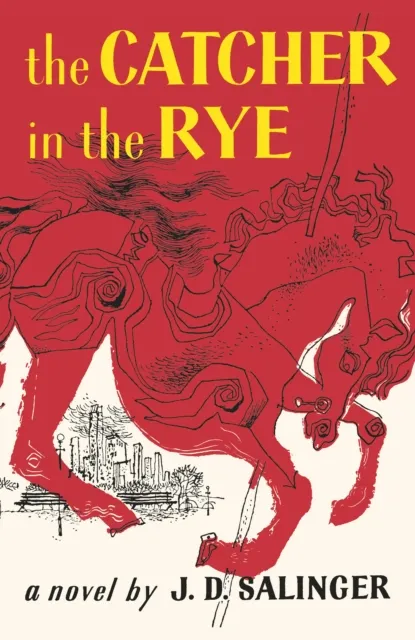
The Catcher in the Rye Summary
J. D. Salinger • Novel, First-person narrative, Coming-of-age story, Young adult literature
The Catcher in the Rye Summary: Book by J. D. Salinger, Characters, and Analysis
The Catcher in the Rye by J. D. Salinger is a landmark coming-of-age novel that explores teenage alienation, identity, grief, and the painful transition from innocence to adulthood. First published in 1951, the novel became an enduring classic for its distinctive narrative voice and raw emotional honesty. This article provides an extended book summary, a detailed overview of the characters, and a thoughtful analysis of The Catcher in the Rye, focusing on its themes, symbolism, and literary significance.
Introduction to the Novel
The Catcher in the Rye, written by J.D. Salinger, stands as a cornerstone of American literature and the coming-of-age genre. The novel introduces readers to Holden Caulfield, a disenchanted teenager whose candid and often raw perspective on life has captivated generations. Through Holden’s eyes, Salinger explores the universal struggles of identity, belonging, and the often turbulent journey from adolescence to adulthood. Holden Caulfield’s voice—by turns witty, vulnerable, and searching—has made him one of literature’s most memorable protagonists. The enduring appeal of The Catcher in the Rye lies in its honest portrayal of the challenges young people face as they navigate a world that can feel both overwhelming and isolating. As readers follow Holden’s story, they are invited to reflect on their own experiences of growing up, making this novel a timeless and thought-provoking read.
Book Summary of The Catcher in the Rye
The Catcher in the Rye is narrated by Holden Caulfield, a disaffected sixteen-year-old whose story begins as he recounts several days in his life following his expulsion from Pencey Prep School, a prep school. Holden narrates that he has been expelled from several schools, including Whooton School and Elkton Hills, and is now leaving Pencey Prep School. His roommate at Pencey Prep is Ward Stradlater. The novel opens with Holden already removed from school, addressing the reader in a conversational, often sarcastic tone that immediately establishes his sense of detachment from the world around him.
Holden leaves Pencey Prep School and rather than returning home to face his parents, he wanders New York City alone. He stays at the Edmont Hotel, where the elevator operator offers to procure a teenage prostitute named Sunny for him. In the hotel, Holden visits the Lavender Room nightclub, where he meets and dances with a young woman and her friends. Throughout his time in the city, Holden interacts with a cab driver who takes Holden from Penn Station to the hotel and later to other destinations, and he spends time at Grand Central Station. Holden also visits Central Park, where he sits and asks Holden (himself) about the ducks in the lagoon, a recurring question that symbolizes his curiosity about change and the unknown.
During his journey, Holden meets various people, including Lillian Simmons at Ernie's, Faith Cavendish, and other young women. He calls people nicknames and often judges them as "phony." Holden thinks deeply about his relationships and feels isolated, especially when reflecting on his sex life and his discomfort and curiosity during encounters with women. He also reflects on his family, including his older brother D.B., a writer, and his dead brother Allie, whose baseball glove with poems written in green ink is a treasured keepsake. Allie's death from leukemia has left Holden traumatized, and he often recalls his dead brother's innocence and kindness.
Holden's teachers play significant roles in his life. His elderly history teacher, Mr. Spencer, tries to motivate him before his expulsion, while his former English teacher, Mr. Antolini, now at New York University (York University), offers advice and support. Holden visits Mr. Antolini in Greenwich Village but ultimately refuses his help and leaves. Holden also makes attempts to contact people from his past, such as Jane Gallagher, a significant figure from his earlier life.
The emotional core of the novel centers on Holden’s relationship with his younger sister, Phoebe, whom he deeply loves and admires. He visits Phoebe at Phoebe's school and later takes her to the carousel in Central Park, where he watches her try to grab the golden ring, symbolizing the pursuit of happiness and innocence. In a key moment, Holden explains his fantasy of being “the catcher in the rye,” imagining himself performing a body catch to save children from falling off a cliff, representing his desperate wish to protect innocence.
As Holden’s mental state deteriorates, he experiences physical exhaustion, anxiety, and emotional collapse. Holden breaks down after a series of stressful encounters and moments of reflection, such as when Holden sits alone in Central Park or his hotel room. Eventually, Holden awakens to the need for help and returns home, where he enters a mental hospital. He narrates the whole story retrospectively from the mental hospital, admitting that what he tells is not the whole story and that he is still struggling to find meaning and healing.
The novel resonates with high school students, as it explores themes of adolescence, alienation, and the challenges of growing up. Holden’s journey, set during the previous Christmas, remains a powerful exploration of youth, loss, and the search for authenticity.
Main Characters in The Catcher in the Rye
Holden Caulfield
The narrator and protagonist. Holden is cynical, sensitive, and deeply conflicted. His sarcasm masks vulnerability, grief, and a fear of adulthood. His voice defines the novel’s tone and emotional depth.
Phoebe Caulfield
Holden’s younger sister. Intelligent, perceptive, and compassionate, Phoebe represents innocence and emotional clarity. She is the person Holden trusts most and the moral anchor of the story.
Allie Caulfield
Holden’s deceased younger brother. Though absent from the present narrative, Allie’s death profoundly shapes Holden’s worldview and emotional struggles.
Mr. Antolini
A former teacher who attempts to guide Holden. His advice reflects concern for Holden’s future, though the encounter ultimately unsettles Holden and deepens his confusion.
Stradlater
Holden’s roommate at Pencey Prep. Confident and socially successful, Stradlater embodies traits Holden resents and misunderstands.
Analysis of The Catcher in the Rye
Major Themes
Alienation and Isolation
Holden’s emotional detachment from society reflects the difficulty of finding authenticity in a world he perceives as artificial. His isolation is both self-imposed and deeply painful.
Loss of Innocence
The novel centers on Holden’s fear of growing up. His obsession with protecting children symbolizes his resistance to change and his longing to escape adult responsibility.
Grief and Trauma
Holden’s unresolved grief over Allie’s death manifests as anger, depression, and emotional instability. The novel presents grief as a quiet but pervasive force.
Identity and Self-Understanding
Holden struggles to define who he is and where he belongs. His wandering through New York mirrors his internal search for meaning and stability.
Symbolism and Literary Devices
- The Catcher in the Rye symbolizes Holden’s desire to preserve innocence.
- The Red Hunting Hat represents individuality and emotional security.
- The Museum of Natural History symbolizes Holden’s longing for permanence in a changing world.
- First-person narration creates intimacy while revealing Holden’s unreliability as a narrator.
Salinger’s informal language and stream-of-consciousness style give the novel its distinctive voice and emotional authenticity.
Author Background and Historical Context
J. D. Salinger was an American writer whose work focused on alienation, spirituality, and the inner lives of young people. Published in post–World War II America, The Catcher in the Rye reflects a generation grappling with disillusionment, conformity, and emotional restraint.
Author’s Other Works
J.D. Salinger, best known for The Catcher in the Rye, was a prolific writer whose life and experiences, including his service in World War II, deeply influenced his literary output. Before the publication of his famous novel, Salinger gained recognition for his short stories, which appeared in esteemed magazines and showcased his distinctive narrative style. Stories like “A Perfect Day for Bananafish” and “Uncle Wiggily in Connecticut” highlight Salinger’s talent for delving into the complexities of the human condition and the struggles of growing up. Many of the themes that define The Catcher in the Rye—such as alienation, identity, and the search for authenticity—are also present in his earlier works. Characters like Sally Hayes, whom Holden telephones during his journey, appear in multiple stories, illustrating the interconnectedness of Salinger’s fictional world. Through his short stories and novels, Salinger invites readers to explore the challenges of youth and the longing for genuine connection.
The Catcher in the Rye by J. D. Salinger: Impact and Legacy
The novel has become one of the most influential works of 20th-century literature. It is frequently assigned to high school students as part of their curriculum, and the novel resonates strongly with adolescent readers. Praised for its honesty and criticized for its language and themes, The Catcher in the Rye continues to resonate with readers exploring identity, adolescence, and emotional vulnerability.
Who Should Read The Catcher in the Rye
- Readers interested in coming-of-age literature
- Students studying modern American fiction
- Those exploring themes of identity, grief, and alienation
- Anyone drawn to character-driven psychological narratives
Conclusion and Final Thoughts
The Catcher in the Rye remains a powerful and resonant novel, speaking to readers across generations about the complexities of growing up. As Holden decides how to face the world’s challenges, his journey becomes a reflection on identity, belonging, and the importance of authentic relationships. Salinger’s portrayal of the adult world, as seen through Holden’s skeptical eyes, offers a poignant commentary on the pressures and expectations that shape our lives. The novel’s most memorable moments—such as when Holden sneaks into his family’s apartment or sits quietly watching Phoebe on the carousel—remind us of the beauty found in simple, genuine experiences. Whether you’re a high school student encountering Holden Caulfield for the first time or an adult revisiting a classic, The Catcher in the Rye encourages empathy, self-reflection, and the courage to preserve one’s individuality. Holden’s story endures because it captures the universal struggle to find meaning and connection in an often confusing world.
Level up your reading with Peech
Boost your productivity and absorb knowledge faster than ever.
Start now